
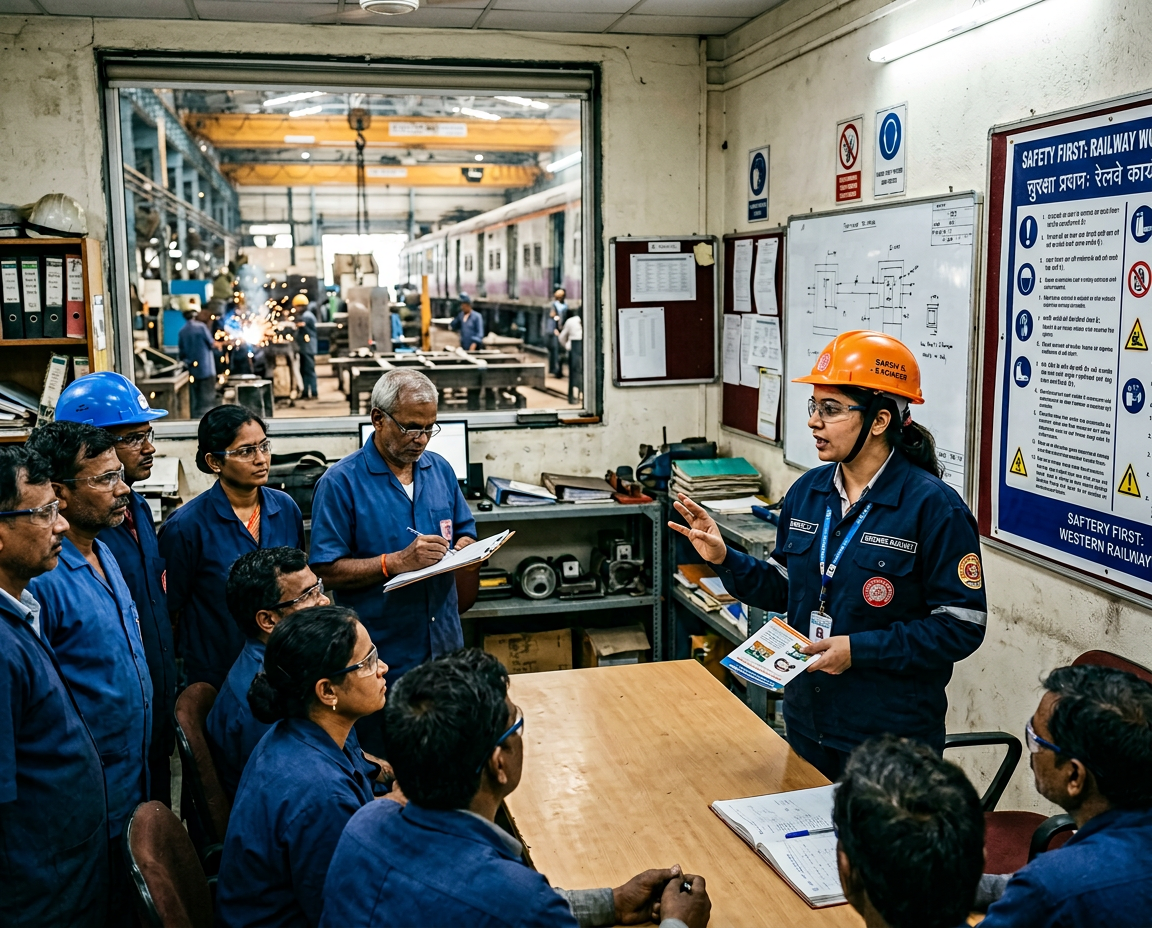
The hum of the old factory was a familiar lullaby to Ela, a sound that had echoed through her family for generations. But beneath the rhythmic clatter of machinery lay a discordant note: the unspoken, yet widely practiced, disregard for safety protocols. “It’s always been done this way,” was the mantra, a shield against any suggestion of change.
Everyone cut corners – bypassing the lockout procedures, ignoring the mandatory glove use, even occasionally disabling the emergency stops for “efficiency.”
Ela, fresh from her engineering degree, saw the glaring red flags. She’d tried, gently at first, to point out the risks. Her colleagues would shrug, offer a knowing smile. “You’ll get used to it, kid. Everyone does it. It’s faster.”
The pressure to conform was immense, a silent current pulling her into the tide of apathy. For a while, she succumbed, her voice shrinking, her concerns buried under the weight of tradition and the fear of being an outcast.
Then came the incident. A near-miss, a grinding halt of a conveyor belt, a worker’s hand inches from disaster, all because a safety guard had been “temporarily” removed. The air crackled with tension, but still, the murmurs began: “Could have been worse,” “Just a close call.”
No one spoke of the root cause, the systemic negligence. That night, the factory’s hum felt like a taunt.
Ela stared at her reflection, seeing not just her face, but the faces of her colleagues, her family, all complicit in this silent agreement. The “everyone else is doing it” excuse felt hollow, a flimsy justification for potential tragedy. A quiet resolve hardened within her.
The next morning, she walked into the supervisor’s office, her heart pounding but her voice steady. “This stops today,” she said, placing a stack of safety manuals on his desk. “We follow the rules. Every single one. Because ‘everyone else is doing it’ isn’t an excuse for someone getting hurt.” It was a small step, a single reed bending against a strong wind, but for Ela, it was the moment the tide began to turn.
This short story is a work of fiction based on life experiences.



Safety conformance and high production volumes are not mutually exclusive. In fact strict compliances of all safety rules leads to overall improvement in productivity, production volumes as well as quality of work.
Wonderfully narrated. Safety is of utmost importance. And the attitude that this is the way it’s always done is no excuse
Wonderful, Sir. Your emphasis on safety be it in the factory, or in train operations, has always stood out as a defining feature of your leadership. And you proved your point consistently through the outcomes in the form of higher productivity, smoother operations, and a team that felt confident and valued.
I have learned from you to look beyond individual lapses and recognise the deeper systemic causes, which is the very essence of the Fundamental Attribution Error (FAE) and systems thinking that you often told us This story underlines that truth once again. Culture, not isolated behaviour, is what truly shapes safety.
Thank you, Sir, for reinforcing this perspective with such clarity.
Reading this story was truly inspiring and insightful. It clearly reflects your unwavering commitment to safety and how deeply safety was embedded in the projects we undertook at RWF. What stands out is that you did not view safety as just a compliance requirement, but as a core value that guided engineering decisions, project execution, and innovation.
The development of the scrap wheel processing system is an excellent example of this approach. The project demonstrates how thoughtful planning, risk awareness, and safe design principles can be integrated right from the concept stage through implementation. Your emphasis on identifying potential hazards, designing safer processes, and ensuring reliable operations highlights a proactive safety culture rather than a reactive one. You have set a benchmark for others to follow. This reminds us that successful projects are not measured only by productivity or innovation, but also by how effectively they protect people and improve the working environment. It serves as an inspiration for all of us to carry forward the same commitment to safety in our own work.”
The “Swiss Cheese Model” by James Reason is a staple of modern industrial safety. It shows that accidents happen when holes in different “layers” of protection (culture, protocols, equipment) line up. Ela’s move was to close the “Culture” hole so the “Incident” hole wouldn’t lead to tragedy.