
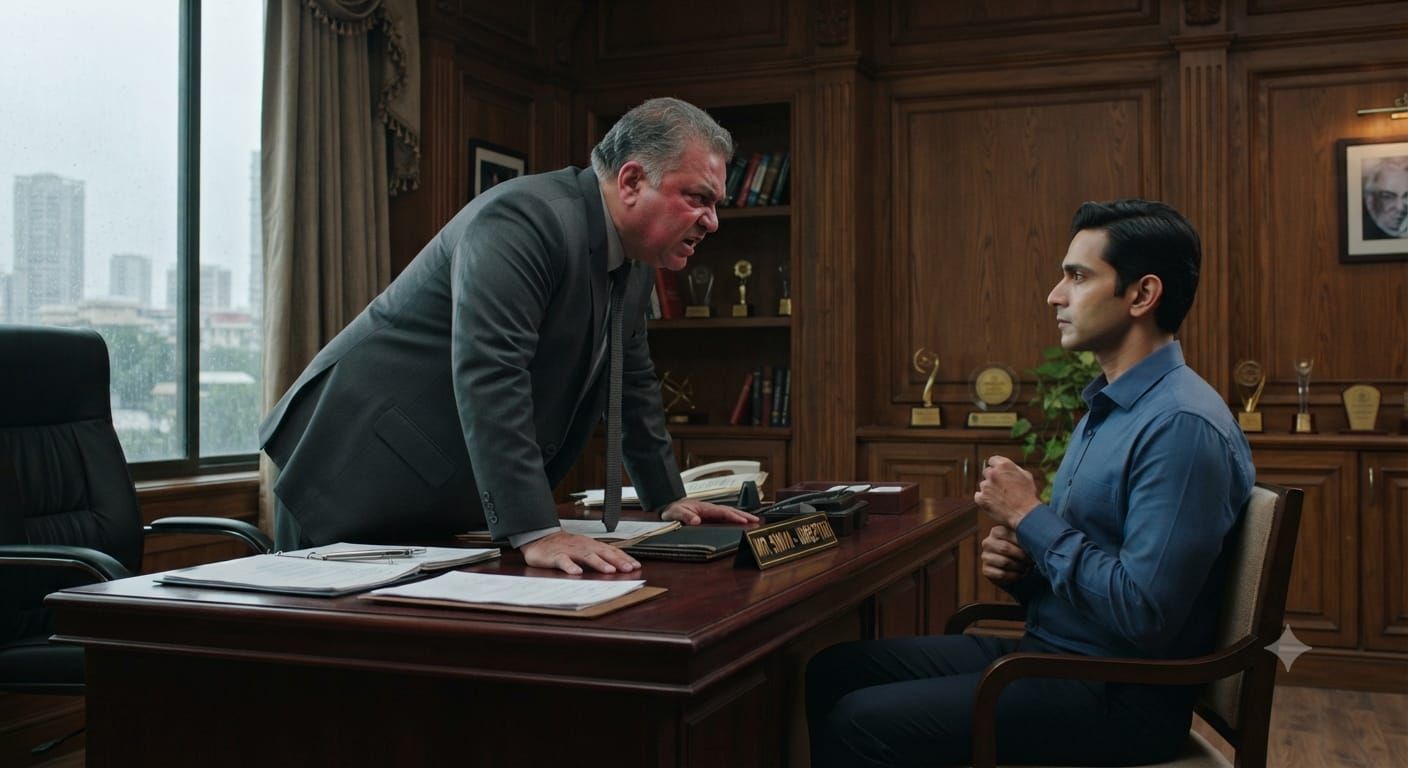
Sachin was, at 40, a study in quiet competence. He managed the high-performing unit with a gentle hand and a sharp mind, consistently delivering results that made the company’s annual reports look good. His success, it sometimes seemed, was irritating for his direct superior, Mr. Seth.
Mr. Seth was the antithesis of Sachin. A booming, 55-year-old manager who relied on fear and intimidation. He viewed calm efficiency as a personal insult to his own aggressive style.
The latest confrontation occurred after Sachin refused to follow verbal instructions for maintaining status-quo in a matter where Sachin had already taken a stand with a view to ensure strict compliance to a safety protocol. Sachin had politely, but firmly, declined to reverse his instructions in the matter.
The next morning, Mr. Seth called Sachin into his cavernous, oak-paneled office. The air was thick with implied threat. Mr. Seth paced like a caged tiger, finally stopping in front of Sachin’s chair, looming over him.
“You think you’re smart, Sachin,” Mr. Seth growled, his voice a low, dangerous rumble. “You think your little performance means anything. The work has been going on like this for decades. I have been in this chair for twenty years, and I know exactly how to handle insubordination.”
Sachin remained seated, his back straight, his expression serene. He looked up at his boss, not with defiance, but with clear, steady patience.
Mr. Seth leaned closer; his eyes narrowed to slits. “We aren’t done here. I will see you” he declared, making the phrase sound less like a parting statement and more like a dire prophecy.
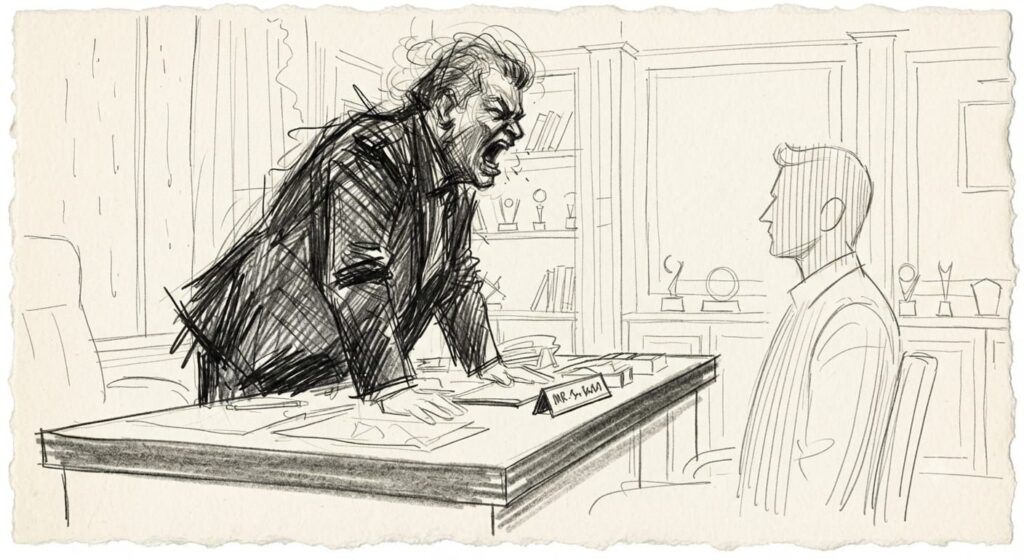
A faint, almost imperceptible smile touched the corner of Sachin’s lips. He didn’t flinch. He adjusted the cuff of his shirt and spoke, his voice calm and level, cutting through the tension like a cool breeze.
“Sir,” Sachin said, his tone perfectly respectful, “I understand your intent. However, I must inform you, sir that there is a long queue of people who wish to ‘see me,’ you may also join the queue.”
Mr. Seth was momentarily stunned, his planned trajectory of fury hitting an unyielding wall of composure. Before he could recover, Sachin delivered the second, equally unexpected blow.
“And yes, Sir, one more thing,” Sachin continued, his gaze direct. “Should you decide that my posting here, in this popular unit and city, needs to be prematurely changed due to my lack of cooperation, I want you to know that I will go and join any place of posting within the permitted joining time even if I am transferred to a bad place pre-maturely away from the present popular posting. My commitment is to the organization, not to a chair. You are free to make your decision.”
Mr. Seth finally took a slow step back. The bluster drained from him, replaced by a dawning realization. The man before him wasn’t arrogant; he was simply unbreakable. He wasn’t relying on office politics or patronage; he was anchored by hard work, honesty, and a profound self-respect.
Over the next few months, the dynamics between them subtly shifted. Mr. Seth began to observe Sachin more closely—the early mornings, the late nights, the genuine respect he commanded from his team, and the measurable, excellent results that poured from his unit.
He realized Sachin’s refusal to compromise wasn’t insubordination, but integrity. It was the quality that made his success real, not manufactured.
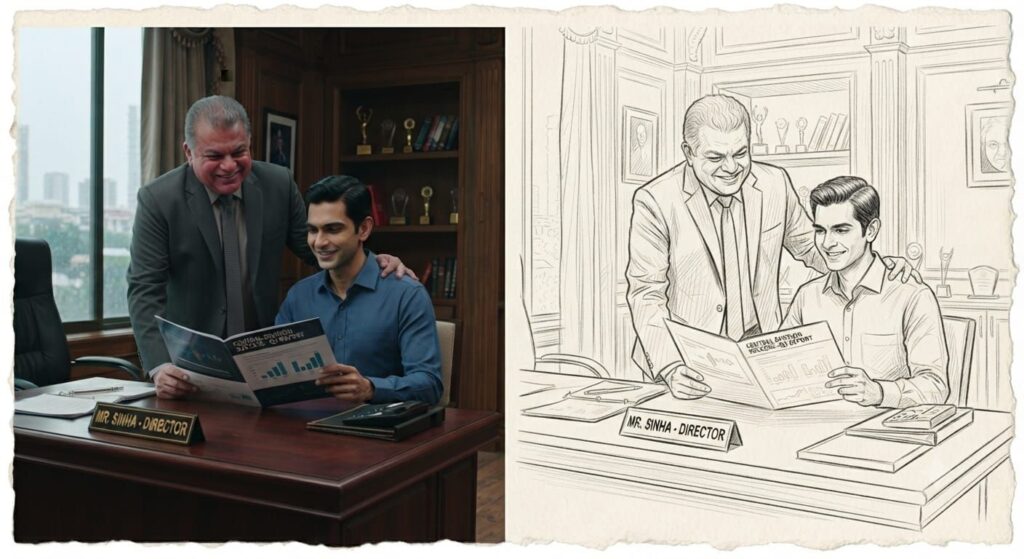
The arrogance melted away, replaced by grudging respect, which slowly blossomed into genuine admiration. Mr. Seth found himself seeking Sachin’s opinion before meetings, relying on his unflappable analysis, and, eventually, defending him vigorously in the boardrooms.
Sachin had not just survived the confrontation; he had turned a dangerous adversary into a powerful supporter and mentor.
Mr. Seth, once a tyrant, now appreciated Sachin’s way of working tremendously, often telling others, “If you want a job done right, find the officer who isn’t afraid to tell you ‘No.'”



Sir only few people can accept “No” and it involves lot of self burning.
Short but very touchy story. We have similar experiences from either side of the table. 🙂
Courage comes from integrity. Courage comes from commitment. A boss’s bluster often comes from insecurity when a subordinate has courage.
Probably this shows, how controlling your emotions and not being controlled by them, sort out a lot of issues.
Nice one, Sir. Only wish, that more such stories have such happy endings in real life!
Very true. As younger us we all had to challenge the conventional ideas based upon mental analysis. As now much older and mature us we got to question were the mental analysis was ultimate solution? Or what is then the ultimate.