The help from Mr Ajay Nandan GM RCF in crystallising the concept of “chasing Ungodliness” is duly acknowledged.
Please scroll down for the Hindi version.
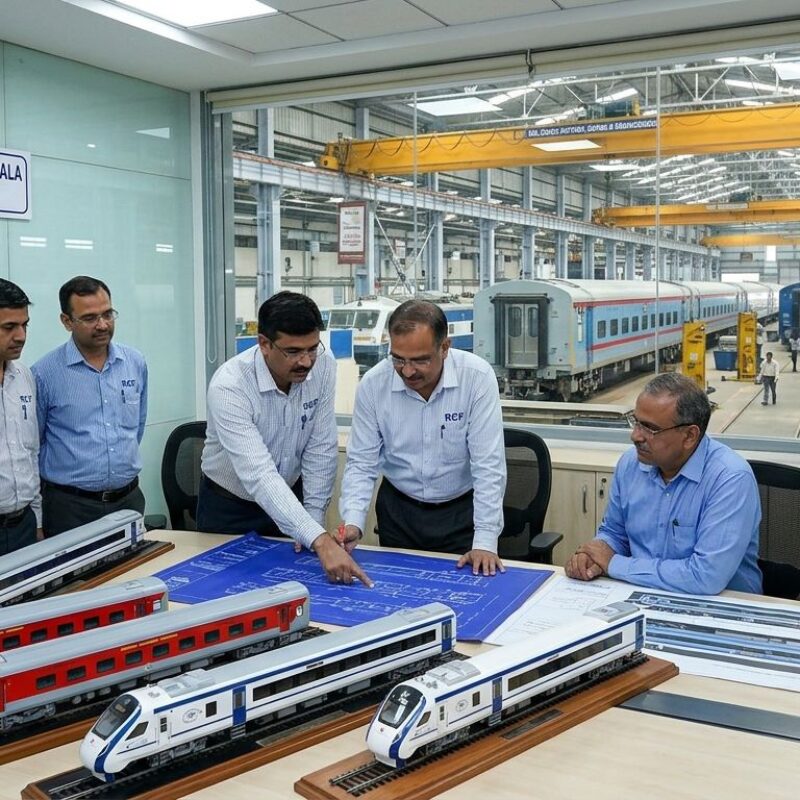
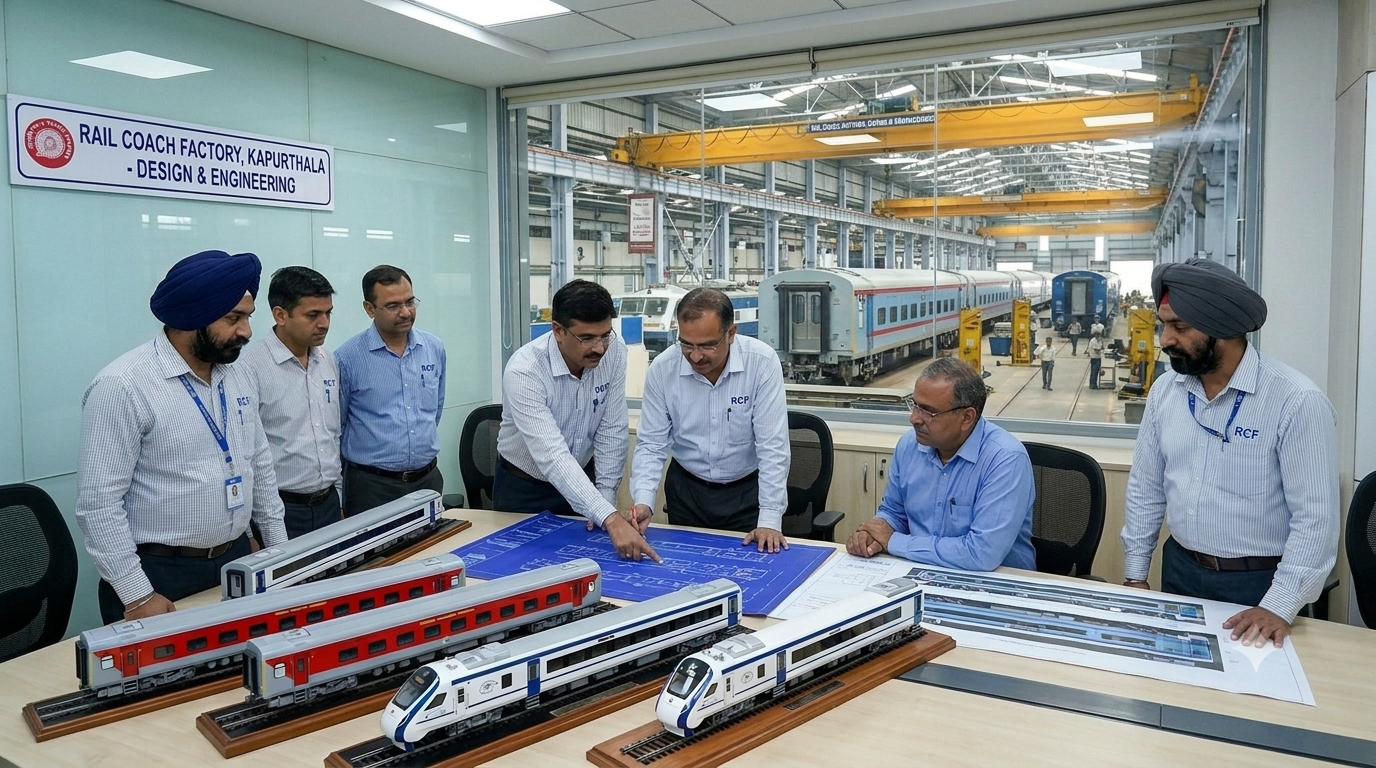
The glow of the dual CAD monitors illuminated the design office at Rail Coach Factory (RCF) Kapurthala, casting sharp shadows across blueprints and model prototypes. Amarjeet, adjusting his dark blue turban, stood alongside his co-lead designer, Vikram, staring triumphantly at a three-dimensional rendering on the main screen.
”Look at that contour, Vikram,” Amarjeet said, his voice filled with genuine awe. “A sweeping, organic, curved-edge panoramic window that seamlessly blends into the coach shell. It completely eliminates the rigid, boxy look of traditional passenger cars. The aerodynamics are pristine, and the passenger view is unobstructed. It’s like something shaped by nature itself—pure, fluid, and brilliantly unique.”
Vikram nodded enthusiastically, zooming in on the intricate rendering. “It’s a masterpiece, Amarjeet. With our advanced 5-axis CNC machining and composite molding lines, we can manufacture these custom-shaped frames down to the sub-millimeter. God creates infinite, breathtaking variety in nature, and today, our flexible manufacturing systems let us match that divine spirit in rail engineering.”
The two designers spent the next few minutes basking in the thrill of creation. They had pushed the boundaries of aesthetic design, crafting a window sub-assembly that felt alive, modern, and completely distinct from anything currently rolling on Indian Railways tracks.
Then, Amarjeet’s phone buzzed on the desk. It was an urgent WhatsApp voice note from Ramesh, a veteran pit-line maintenance supervisor at the Bengaluru coaching depot.
Amarjeet tapped play. Ramesh’s voice, raspy and tired against the background clatter of pneumatic wrenches, crackled through the speaker: “Amarjeet-ji, saw the preliminary specs for the new luxury rake window line. Beautiful to look at, truly. But tell me—when a stray stone shatters that curved corner pane during a midnight run near Jolarpettai, how exactly is my depot crew supposed to swap it out in forty-five minutes before the morning departure? Right now, your CAD file shows a bespoke proprietary bonding adhesive, a custom rubber seal with a non-standard lip, and twelve micro-fasteners requiring a rare star-head torque wrench that nobody carries in a standard tool kit.”
The room went dead silent.
Amarjeet stared at the audio wave on his phone, the celebratory mood evaporating instantly. He slowly turned back to the CAD screen and pulled up the fastener specification layer.
The sudden truth hit him like a physical blow.
In their pursuit of artistic perfection and organic form—celebrating the “godliness” of infinite, bespoke design—they had completely ignored the brutal reality of the field. They had engineered a masterpiece of manufacturing, but a nightmare of maintenance.
If every coach had a unique window radius, custom-curved glass, and proprietary fasteners, a routine pane replacement would transform into an artisanal restoration project requiring specialized factory jigs, toxic chemical sealants, and hours of curing time. Trains would be sidelined in depots for days waiting for specialized parts. The availability of spares would collapse under the weight of excessive variety.
Amarjeet swallowed hard, looking at Vikram, who had gone pale as the realization dawned on him as well.
”We messed up, Vikram,” Amarjeet said quietly, scrolling back to the root assembly. “We got so lost in praising godliness—in making it look organic, unique, and avant-garde—that we forgot our primary covenant with the men on the ground.”
”We chased pure aesthetics,” Vikram whispered, finishing the thought, “and completely ignored the discipline of ungodliness.”
”Exactly,” Amarjeet said, his voice firming up as he grabbed a digital stylus. “Delete the custom curve on the bottom flange. Standardize the outer frame envelope so it fits the exact same rough-opening cutout as our legacy LHB coaches. And scrap those boutique fasteners.”
”What should we put in their place?” Vikram asked.
”Standard, off-the-shelf M8 metric hex bolts,” Amarjeet declared, pulling up a standard parts library. “A universal rubber gasket profile that any depot in the country has in stock by the thousand. A modular, drop-in glass cartridge that can be unbolted with a standard spanner by a tired technician working under a floodlight at 3:00 AM.”
Amarjeet leaned back, looking at the newly simplified interface lines taking shape on the screen. The sleek, modern exterior view for the passenger remained intact, but behind the glass—where it mattered most for survival—unyielding standardization had taken over.
”We can innovate the glass material and the thermal insulation all we want,” Amarjeet murmured, a sense of quiet relief settling over him. “That’s our creative freedom. But the interface, the mounting pitch, and the fasteners? Those must remain strictly, beautifully ungodly—100% uniform, interchangeable, and simple. That’s how we keep the wheels turning.”
यहाँ प्रस्तुत है इस कहानी का सरल हिंदी में अनुवाद:
“समरूपता का पीछा” (Chasing Ungodliness)
“अधर्म/समरूपता का पीछा” (Chasing Ungodliness) की अवधारणा को आकार देने में मदद के लिए जीएम आरसीएफ (RCF) श्री अजय नंदन जी का सहृदय आभार।
रेल कोच फैक्ट्री (आरसीएफ), कपूरथला के डिज़ाइन कार्यालय में दो सीएडी (CAD) मॉनिटरों की चमक फैली हुई थी, जिससे ब्लूप्रिंट और मॉडल प्रोटोटाइप पर स्पष्ट परछाइयां बन रही थीं। अमरजीत अपनी गहरे नीले रंग की पगड़ी ठीक करते हुए अपने सह-मुख्य डिज़ाइनर विक्रम के साथ खड़े थे। दोनों मुख्य स्क्रीन पर तीन-आयामी (3D) मॉडल को गर्व से देख रहे थे।
अमरजीत ने गहरी हैरानी और प्रशंसा के साथ कहा, “विक्रम, इस डिज़ाइन की रेखाओं को देखो! एक बहती हुई, प्राकृतिक घुमावदार पैनोरमिक खिड़की, जो कोच के बाहरी हिस्से में पूरी तरह घुल-मिल जाती है। इसने पारंपरिक डिब्बों के पुराने, चौकोर लुक को पूरी तरह खत्म कर दिया है। इसका हवा का प्रवाह (एरोडायनामिक्स) बेहतरीन है और यात्रियों को बाहर का नजारा एकदम साफ दिखेगा। यह प्रकृति द्वारा बनाई गई किसी वस्तु जैसा लगता है—शुद्ध, सुंदर और अनोखा।”
विक्रम ने उत्साही होकर सहमति जताई और स्क्रीन पर डिज़ाइन को बड़ा करते हुए कहा, “यह एक उत्कृष्ट कृति है, अमरजीत। हमारी आधुनिक 5-एक्सिस सीएनसी मशीनों और कंपोजिट मोल्डिंग के साथ, हम इन खास आकार के फ्रेमों को मिलीमीटर के सूक्ष्म हिस्से तक सटीक बना सकते हैं। ईश्वर प्रकृति में अनंत और अद्भुत विविधता बनाता है, और आज हमारी आधुनिक निर्माण प्रणाली हमें रेल इंजीनियरिंग में उसी भावना को अपनाने का मौका देती है।”
अगले कुछ मिनटों तक दोनों डिज़ाइनरों ने अपनी इस रचना का आनंद लिया। उन्होंने सुंदरता की सीमाओं को लांघकर खिड़की का एक ऐसा ढांचा तैयार किया था, जो जीवंत, आधुनिक और भारतीय रेलवे की पटरियों पर चलने वाली किसी भी चीज़ से अलग था।
तभी मेज़ पर रखा अमरजीत का फ़ोन बजा। यह बेंगलुरु कोचिंग डिपो के एक अनुभवी पिट-लाइन रखरखाव पर्यवेक्षक (मेंटेनेंस सुपरवाइजर) रमेश का एक ज़रूरी व्हाट्सएप वॉइस मैसेज था।
अमरजीत ने प्ले बटन दबाया। न्यूमेटिक रिंचों (पानों) की खटखटाहट के बीच रमेश की थकी हुई आवाज़ गूंजी: “अमरजीत-जी, नए लग्जरी कोच की खिड़की के शुरुआती स्पेसिफिकेशन देखे। देखने में वास्तव में बहुत खूबसूरत हैं। लेकिन मुझे एक बात बताइए—जब जोलारपेट्टई के पास आधी रात को पत्थर लगने से यह घुमावदार कांच टूट जाएगा, तो सुबह ट्रेन रवाना होने से पहले 45 मिनट में मेरी डिपो टीम इसे कैसे बदलेगी? अभी आपके CAD फ़ाइल में एक खास तरह का गोंद (एडहेसिव), एक अलग रबर सील और 12 ऐसे सूक्ष्म पेच (फ़ास्टनर) दिख रहे हैं, जिन्हें खोलने के लिए एक खास स्टार-हेड टॉर्क रिंच चाहिए, जो किसी साधारण टूल किट में नहीं होता।”
कमरे में पूरी तरह सन्नाटा छा गया।
अमरजीत अपने फ़ोन पर ऑडियो की तरंगों को घूरते रहे, और खुशी का माहौल तुरंत गायब हो गया। वे धीरे से स्क्रीन की ओर मुड़े और पेच (फ़ास्टनर) वाली परत को खोला।
कड़वी सच्चाई उनके सामने आ चुकी थी।
कलात्मक सुंदरता और अनोखे डिज़ाइन के चक्कर में—अनोखी विविधता (“ईश्वरत्व”) का जश्न मनाते हुए—वे ज़मीनी हकीकत को पूरी तरह भूल गए थे। उन्होंने निर्माण के लिहाज़ से एक उत्कृष्ट कृति बनाई थी, लेकिन रखरखाव (मेंटेनेंस) के लिहाज़ से एक बहुत बड़ी मुसीबत खड़ी कर दी थी।
अगर हर कोच की खिड़की का घुमाव अलग होता, कांच अलग होता और पेच अलग होते, तो एक साधारण कांच बदलना भी किसी विशेष कारीगरी जैसा काम बन जाता। इसके लिए कारखाने के खास सांचों, रसायन और सूखने के लिए घंटों समय की आवश्यकता होती। ट्रेनें स्पेयर पार्ट्स के इंतजार में दिनों-दिन डिपो में खड़ी रहतीं।
अमरजीत ने गहरी सांस ली और विक्रम की तरफ देखा, जो सच्चाई समझकर खुद पीला पड़ गया था।
अमरजीत ने धीरे से कहा, “विक्रम, हमसे गलती हो गई। हम ईश्वरत्व (विविधता) की प्रशंसा करने में इतने खो गए—इसे प्राकृतिक, अनोखा और आधुनिक बनाने में—कि हम ज़मीन पर काम करने वाले कर्मचारियों के प्रति अपनी प्राथमिक ज़िम्मेदारी ही भूल गए।”
“हमने सिर्फ सुंदरता का पीछा किया,” विक्रम ने बात पूरी करते हुए धीरे से कहा, “और समरूपता (ungodliness) के नियम को पूरी तरह नजरअंदाज कर दिया।”
“बिल्कुल,” अमरजीत ने डिजिटल पेन उठाते हुए मजबूती से कहा। “नीचे के किनारे के इस खास घुमाव को हटाओ। बाहरी फ्रेम के आकार को ऐसा मानक (standard) बनाओ जो हमारे पुराने एलएचबी (LHB) कोचों के कटआउट में बिल्कुल फिट बैठ सके। और उन विशेष पेचों को हटाओ।”
“उनकी जगह हम क्या इस्तेमाल करें?” विक्रम ने पूछा।
“साधारण, बाज़ार में मिलने वाले M8 मीट्रिक हेक्स बोल्ट,” अमरजीत ने मानक पार्ट्स की लाइब्रेरी खोलते हुए कहा। “एक सामान्य रबर गैस्केट जो देश के किसी भी डिपो के स्टॉक में हज़ारों की संख्या में मौजूद होती है। एक ऐसा मॉड्यूलर कांच जो रात के 3 बजे तेज़ रोशनी में काम कर रहे थके हुए तकनीशियन द्वारा एक साधारण पाने (स्पैनर) से आसानी से बदला जा सके।”
अमरजीत पीछे हटे और स्क्रीन पर नए, सरल आकार को देखने लगे। यात्रियों के लिए बाहर से दिखने वाला आधुनिक लुक वैसा ही था, लेकिन कांच के पीछे—जहाँ असल काम की चीज़ थी—वहाँ पूरी तरह से मानकीकरण (समरूपता) लागू हो चुका था।
अमरजीत ने राहत की सांस लेते हुए धीरे से कहा, “हम कांच की गुणवत्ता और थर्मल इंसुलेशन में जितना चाहें नवाचार (इनोवेशन) कर सकते हैं। यह हमारी रचनात्मक स्वतंत्रता है। लेकिन जोड़, माउंटिंग और पेच? उन्हें पूरी तरह से समरूप, एकसमान और सरल होना चाहिए। तभी ट्रेन के पहिये बिना रुके चलते रहेंगे।”