
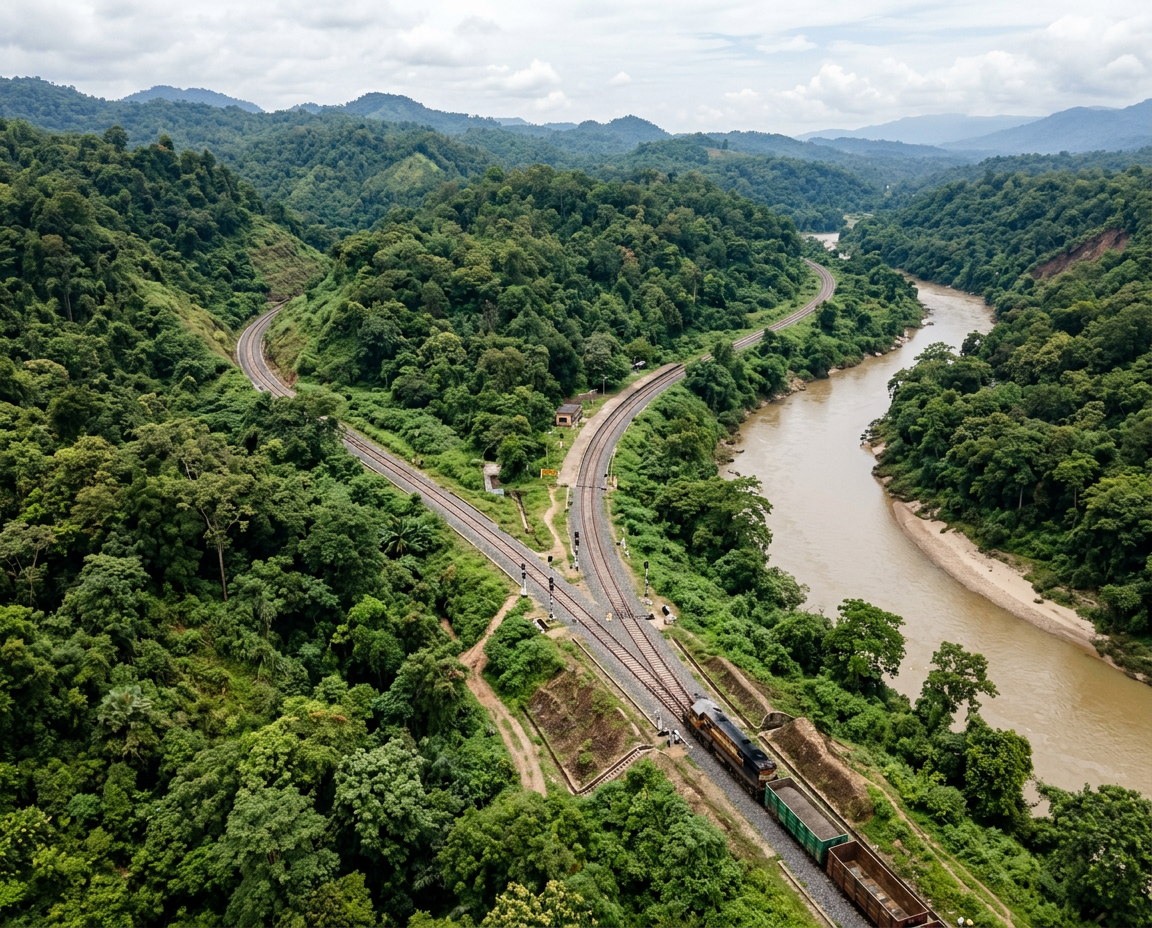
In the misty, rain-soaked jungles of the Duars, where lightning strikes with the frequency of a caffeinated woodpecker and the tea gardens are as lush as a Victorian novel, lies the Alipurduar Division of the Northeast Frontier Railway. This isn’t just a scenic train ride; it’s the “Chicken’s Neck”—the vital, narrow umbilical cord connecting mainland India to its seven northeastern sisters.
But in April 2015, that cord was feeling less like a lifeline and more like a strangling knot.
The Morning Call of Doom
It was 8:20 AM. The sky was leaking like a broken faucet after a night of apocalyptic thunderstorms. Inside the Divisional Railway Manager’s (DRM) office, the mood was equally heavy. The tracks were congested, punctuality was a myth, and maintenance was a distant dream because there was never a “slot” where a train wasn’t sitting on the tracks like a stubborn mule.
The DRM, fresh-faced and only months into the job, dialed the General Manager (GM) in Guwahati.
“Sir,” the DRM chirped, “I think I’ve found the solution to the mainline congestion.”
There was a pause. The kind of pause a parent gives a toddler who claims they’ve found a way to make the cat do the dishes.
“Listen,” the GM replied, his voice colder than a winter night in the Himalayas. “I’ve been working on this for three years. You’ve been here three months. You think it’s that easy?”
But the DRM wasn’t just whistling in the rain. He had discovered the Curious Case of the Half ‘Y’.
The Elephant in the Room (Literally)
To understand the DRM’s “Aha!” moment, one must understand the chaotic chess board of Alipurduar operations. The division was juggling three main lines:
- BG1 (The Workhorse): The mainline. It was at 170% capacity. If it were a bus, people would be hanging off the mirrors and sitting on the radiator.
- BG2: The double-line section, doing its best but hampered by the bottlenecks on either side.
- BG3 (The Jungle Book): A single line that sounds romantic until you realize it passes through four wildlife sanctuaries.
The BG3 was the site of the ultimate “Managerial Nightmare”: Train-Elephant Collisions. Elephants, being highly intelligent socialites, frequently crossed the tracks. Sometimes a naughty calf would wander off; sometimes a “Makhana” (a lone male) would get chased out of a crop field by angry villagers and run headlong into a locomotive.
Following a Supreme Court directive in 2013, BG3 was placed under strict speed limits and diverted traffic. This sent every train screaming into BG1, turning it into a parking lot.
The Land of the Uncompromising Landowner
The solution seemed simple: Build a new line (BG4) to bypass the mess. The government had even started a project for a ‘Y’ connection to link the new tracks to the mainline.
However, the ‘Y’ was missing. Why? Because of a classic management hurdle: The Bottleneck. In this case, it was a literal piece of land owned by a gentleman who refused to sell unless the Railways paid him a sum roughly equivalent to the GDP of a small island nation.
Because of the 2013 Land Acquisition Act and the political sensitivity of land rights, the project was stalled. Hundreds of crores had been “sunk” into the tracks, but they led nowhere. It was a bridge to nowhere—or rather, a track to a fence.
The DRM’s “Lateral” Leap
The DRM didn’t just write another bureaucratic letter to the District Magistrate. Instead, he did something radical: He looked at a map.
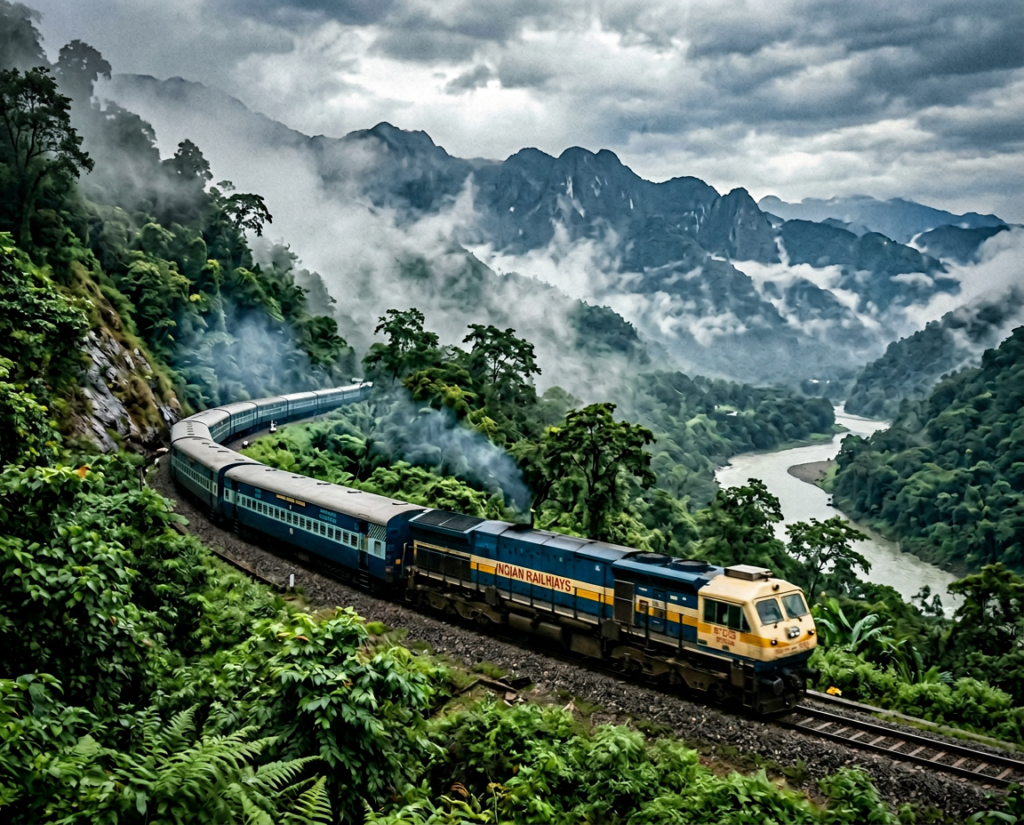
One morning, while squinting at Google Earth and topographical maps, he noticed a sliver of land. It was sandwiched between the Teesta River and the existing tracks.
“Whose land is this?” he asked the Senior Divisional Engineer (Sr. DEN).
The Sr. DEN was skeptical. “It’s a futile exercise, Sir.”
But a week of digging through dusty records revealed a miracle: The land already belonged to the Railways. It was a thin strip, occupied by a few hutments that could be easily relocated.
The DRM proposed a “Half ‘Y'”. Instead of waiting for the landowner on the east side to budge, they would build a connection on the west side, entirely on their own land. It was elegant, it was sneaky, and it was brilliant.
From “Impossible” to “Incredible”
When the GM saw the flags marking the new curve along the Teesta River, his skepticism vanished.
“This is mind-blowing,” he admitted.
By June 2016, the Half ‘Y’ was commissioned. It was like adding a high-speed bypass to a clogged artery.
| Benefit | Before Half ‘Y’ | After Half ‘Y’ |
| Line Capacity (BG1) | 170% (Congested) | Reduced by 25-32% |
| Maintenance Blocks | Almost Zero | Increased by 116% |
| Goods Train Speed | Crawling | Significant Improvement |
| Elephant Safety | High Risk | High (Goods trains diverted) |
The “Management Education” Takeaways
The Case of the Half ‘Y’ isn’t just about trains; it’s a masterclass in modern management:
- Look Beyond the Obvious: While everyone was staring at the “Blocked Land,” the DRM looked at the “Available Land” on the other side of the tracks.
- Asset Sweat: Don’t let hundreds of crores in “sunk costs” sit idle. Find the missing 1% that makes the 99% functional.
- The Power of Data: The Finance Officer later proved that this small connection saved Rs. 19 Crores per year in detention costs alone.
- Social Impact: It wasn’t just about money. It allowed the Padatik Express to be extended and introduced new DEMU trains, connecting remote villages to hospitals and markets.
EPILOGUE: The Silence of the Politician
Years later, in 2020, as the world slowed down for the pandemic, the officers—now promoted and scattered across India—shared a laugh.
The DRM remembered a local leader who had come to his office with a list of demands, top of which was a train extension people had been begging for 10 years.
“It’s already done,” the DRM had told him.
The politician was speechless—a rare feat in Indian history.
The “Half ‘Y'” stands as a monument to the idea that sometimes, when the front door is locked and the key is too expensive, you should just check if the side window is already open.
This short story is a work of fiction based on life experiences.

This is a truly historic achievement, Sir. It has transformed train operations in the Alipurduar Division and marks a new era for the entire N.F. Railway. Your visionary leadership and unwavering dedication have made this milestone possible. Heartiest congratulations to everyone who contributed to this remarkable success.
Yes Sir, this became possible only for your wise thinking, planning, timely execution and dedication for the Indian Railways.