
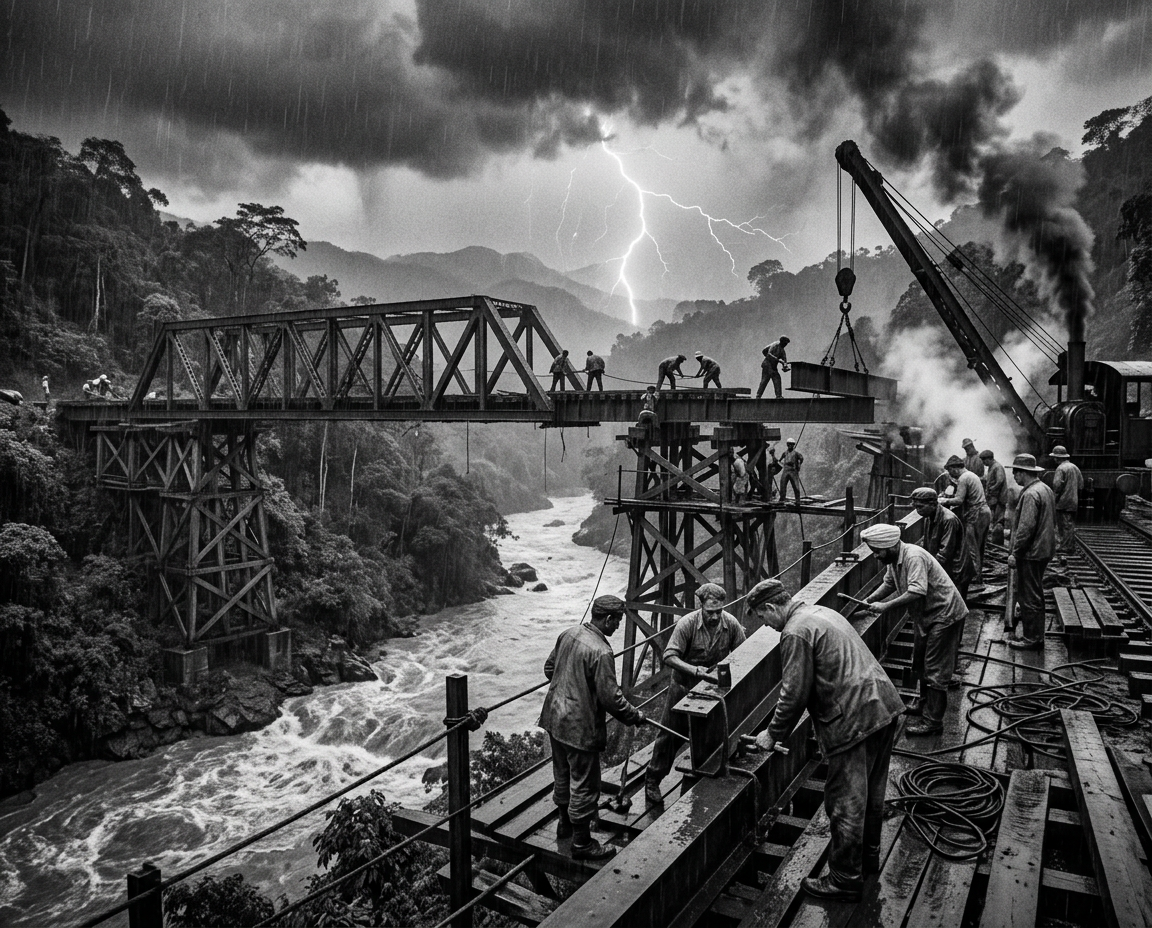
The year was 1948. The air in Alipurduar, a remote speck of a railway station in North West-Bengal’s Duars, was thick with humidity and the smell of wet earth. India, barely a year into its independence, was a nation finding its breath, and Kishore, a young engineer fresh out of college, was one of the many hands tasked with laying the very arteries of its future. His mission: the Assam Rail Link Project (ARLP), an audacious plan to stitch together the disparate legacy North-South lines and forge a seamless link between Siliguri and Guwahati.
The Duars, Kishore soon learned, was a world unto itself—a land of staggering beauty and relentless, primal challenge. His posting felt less like an engineering assignment and more like a battle against the elements. The Kaal Baisakh, the notorious nor’wester storms of April, hammered the region with a fury that felt biblical. Some nights, the sky was a canvas of terrifying, blinding light as the region experienced some of the world’s heaviest lightning intensity. The deafening, continuous roar made sleep a forgotten luxury.
Kishore’s work took him deep into the emerald labyrinth of the Mahananda, Jaldapara, Chapramari, Gorumara, Chilapata, and the imposing Buxa Jungles. The targets were immense: major bridges needed to span the formidable Jaldhaka, Teesta, Torsa, and several smaller, treacherous rivers like the Murti, Kurti, Neora, Rydak, Santokh, and Kaaljani.
Every step was a struggle. Malaria and other fever-inducing illnesses swept through the workers. Without adequate medical facilities, Kishore watched his colleagues and the dedicated local laborers fall sick, their energy sapped, their morale tested, yet their resolve unbroken.
But the most immediate, terrifying challenge came from the wild, magnificent inhabitants of the jungle. Kishore was always on edge. Mosquitoes and snakes were a daily peril, yet it was the giants that haunted his nightmares. Tigers stalked the peripheries of the camps, their presence a silent threat. And then there were the elephants. They moved with an uncanny, padded silence, their massive feet making no sound on the wet, vegetated soil. They appeared like ghosts in the mist, and an unsuspecting worker could be tossed like a doll or simply trampled in an instant. Some nights, a fitful sleep would give way to a vivid dream of being lifted by a huge elephant and thrown high above the massive canopy of the Buxa trees.
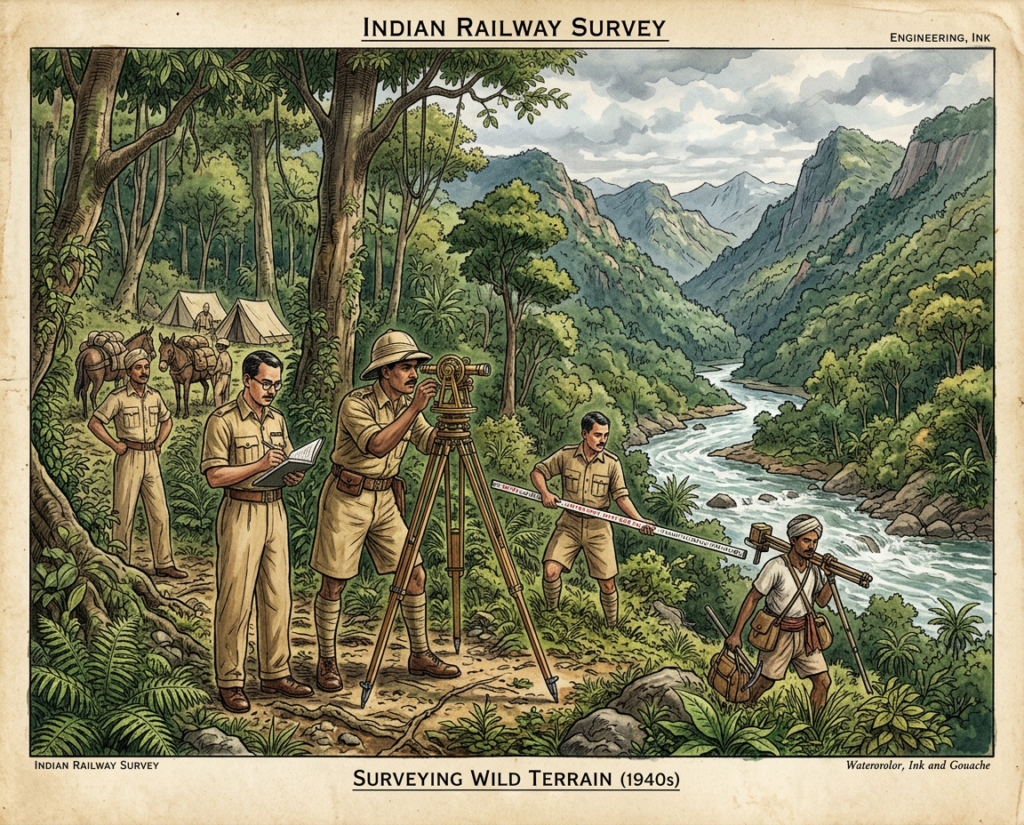
Through the sickness, the storms, the floods, and the constant threat of the wild, Kishore and his team pressed on. They battled the recalcitrant terrain, wrestled with the logistics of early independent India, and worked with a single-minded determination that astonished all who witnessed it.
Then, in a remarkable feat of engineering and sheer will, the Assam Rail Link Project was commissioned in a record time. The ribbon was cut, the lines were joined, and the seamless flow of traffic began.
A wave of quiet pride washed over Kishore when he read the tributes. Sardar Vallabhbhai Patel, the Home Minister, spoke in the Parliament, his words echoing the magnitude of their achievement: “This is the most remarkable railway achievement with immense potentialities for the future. We shall have drawn Assam closer to us and the opening up of this communication would, I am sure, form a very vital link in the consolidation of our country.”
Mr. F. C. Badhwar, the Chairman of the Railway Board, cemented their legacy: “A fairly extensive acquaintance with Railwaymen in many countries has led me to believe that Indian Railwaymen of all levels are second to none in either keenness or competence and, if proof was needed to confirm this belief, their achievements on the Assam Rail Link have provided it.”
The following year, the Kaal Baisakh was severe once more. The lightning cracked, and the thunder rolled, a continuous, deafening roar throughout the night. But this time, Kishore slept well. A deep calmness and satisfaction of achievement filled his mind. The troubles had come, and he had not been saved from them, but he had faced them and won.
He remembered the prayer of Gurudev Rabindranath Tagore from the Gitanjali, the words that gave his struggle its true meaning:
“Bipade more rakha Koro:
Oh God, I have not come to you with a prayer that you save me from all kind of troubles, I only pray to you that you give me strength to face and win over all the troubles that I may come across in my path.”
This short story is a work of fiction based on life experiences.

A great story which is likely to be owned and reminisced by a number of railway men past and present finding and connecting real life anecdotes ….
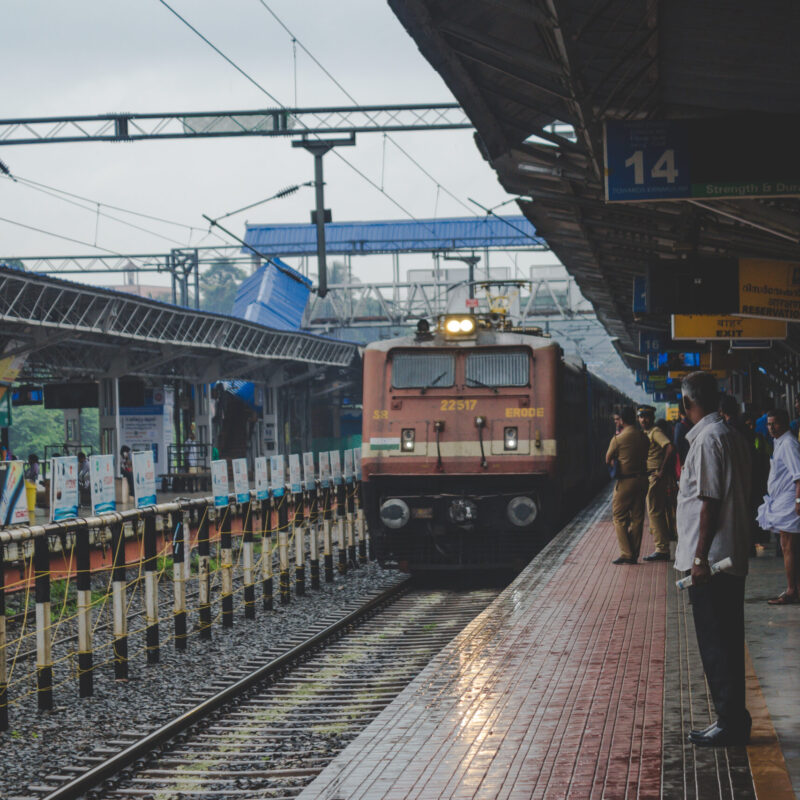
While we travel in comfort, we must pause and wonder about many unwritten tales of Kishores who have worked like soldiers to have made today’s journey possible.
Good story on struggle by Engineers for the cause.
I really liked this story. For a change, the hero was not a mechanical engineer but a civil engineer—quietly building bridges and connecting a nation rather than just machines!
I also liked the mention of Sardar Patel, which reminded me of his immense contribution to unifying India. The Assam Rail Link felt like an extension of that same vision.
The line, *”A deep calmness and satisfaction of achievement filled his mind,”* stayed with me. And the ending with Tagore’s prayer was simply beautiful. The message of seeking strength to face challenges, rather than escape them, perfectly captures the spirit of the story.
This is a deeply inspiring tribute to the unsung engineers and workers who built the foundations of modern India under extraordinary circumstances. Beyond steel tracks and bridges, they connected people, regions, and hopes for a newly independent nation.
The closing prayer from Gurudev Rabindranath Tagore beautifully captures the spirit of resilience—that real strength lies not in avoiding adversity but in facing it with determination and dignity. A powerful and moving narrative that deserves to be remembered.
Very few realise how much sustained effort, courage and commitment goes into building such marvels.
To maintain such an asset in dangerous surroundings is also quite challenging.
A great and inspiring story vividly depicting the challenges faced by the creators of the Assam Rail Link Project traversing through bunch of rivers and forests. Today I can very well imagine of those tough times while travelling on the same track.
Thanks a lot. Yes, I always wonder as to how many train travellers appreciate the hardships faced by the “first-movers” !