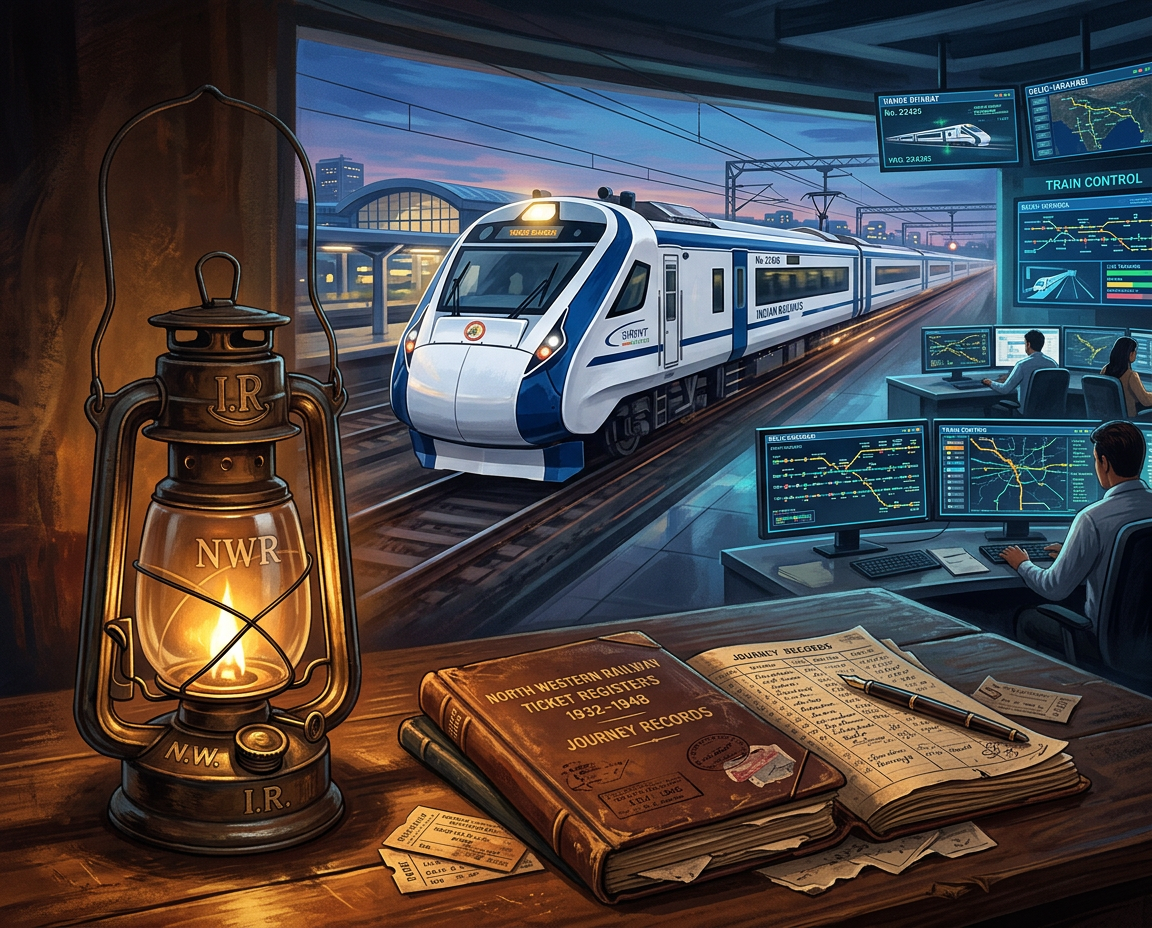
The old brass Railway lantern on the porch flickered, casting long, wavering shadows. Inside, the familiar scent of oil and old paper filled Kshitij’s senses as he looked at the weathered face of his grandfather, Dadaji Nawal Kishore.
The Luddite’s Regret: 1986
“It was a different time, Kshitij.” Dadaji Nawal Kishore began, a deep sigh rattling his chest. “When they first proposed the Passenger Reservation System (PRS) in the railways, a few computer screens to replace ledgers and hand-written charts… we all saw it as a demon.”
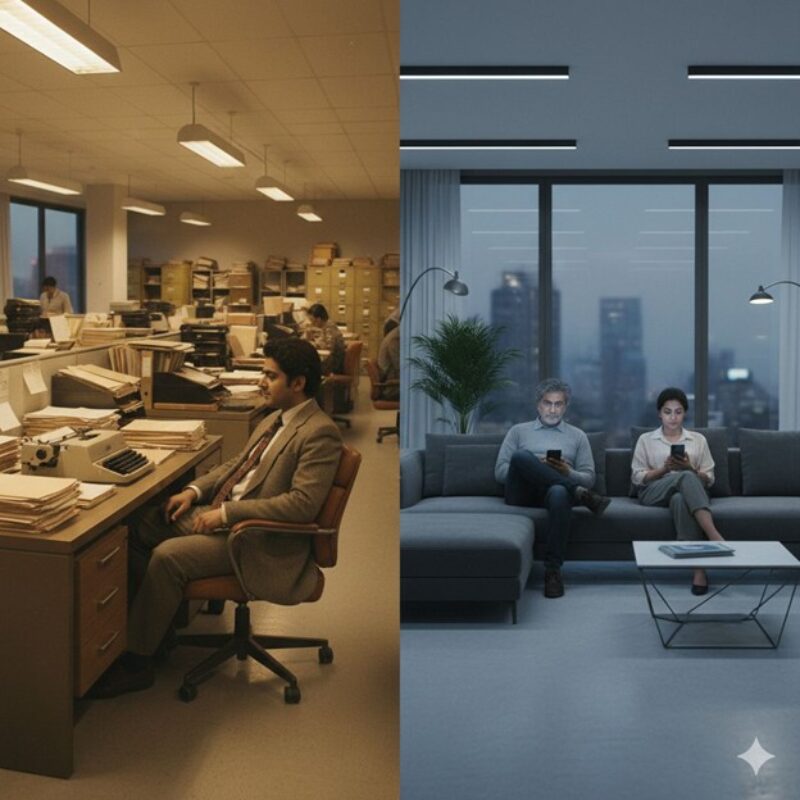
In the 1980s, the introduction of computers to the ticket booking process in Indian Railways was met with fierce resistance. Dadaji, a respected union leader, was at the forefront. “We were the Luddites,” he admitted, shaking his head. “We thought it meant immediate job loss. We saw the machine as a thief of a poor man’s livelihood. We launched protests, called for strikes, and shouted slogans. For over a decade, we fought it tooth and nail.”
He paused, a flicker of genuine shame in his eyes. “Then, one day in the late 1990s, I stood in a queue at the Delhi station. It used to take four hours just to find out if a seat was available. That day, a young clerk, with a few clicks, confirmed a ticket to Kolkata in less than ten minutes. I looked at the relieved faces of the passengers, especially the elderly, and realized… we had fought progress.”
The PRS, which allowed for ‘anywhere-to-anywhere’ booking and eliminated the serpentine queues, was not a job thief but a time-saver and a stress-reliever for millions. The redundant staff were retrained and redeployed, a concession the unions had won, which helped the transition. Dadaji had fought the tide, only to realize years later that the machine was, in fact, an essential servant to society.
The Backbone of Innovation: Rail Coach Factory (RCF)
The true measure of technology’s power, however, began to unfold with the next generation.
“Your father, Kaushal Kishore, was a pioneer,” Dadaji beamed. “He started his career at Rail Coach Factory (RCF), Kapurthala, in the new millennium, and he saw the difference immediately.”
RCF was a modern, digitally driven manufacturing unit. Kaushal often described to a young Kshitij how the Information Systems were the real backbone of the new product development. Unlike the older factories like the Integral Coach Factory (ICF) in Chennai, which relied on outdated drawings and took years to develop a new passenger coach design, RCF was different.
“Your Papa would always tell me how RCF could switch from one coach design to another in a matter of months,” Kshitij remembered. “Everything—from the Computer-Aided Design (CAD) models to the inventory management and Computer Numerical Control (CNC) machinery—was integrated. This digital capability made them agile. RCF’s rapid adoption of LHB technology and modern manufacturing processes proved that technology was the engine of speed and quality.”
The Deep Embrace: Integral Coach Factory (ICF)
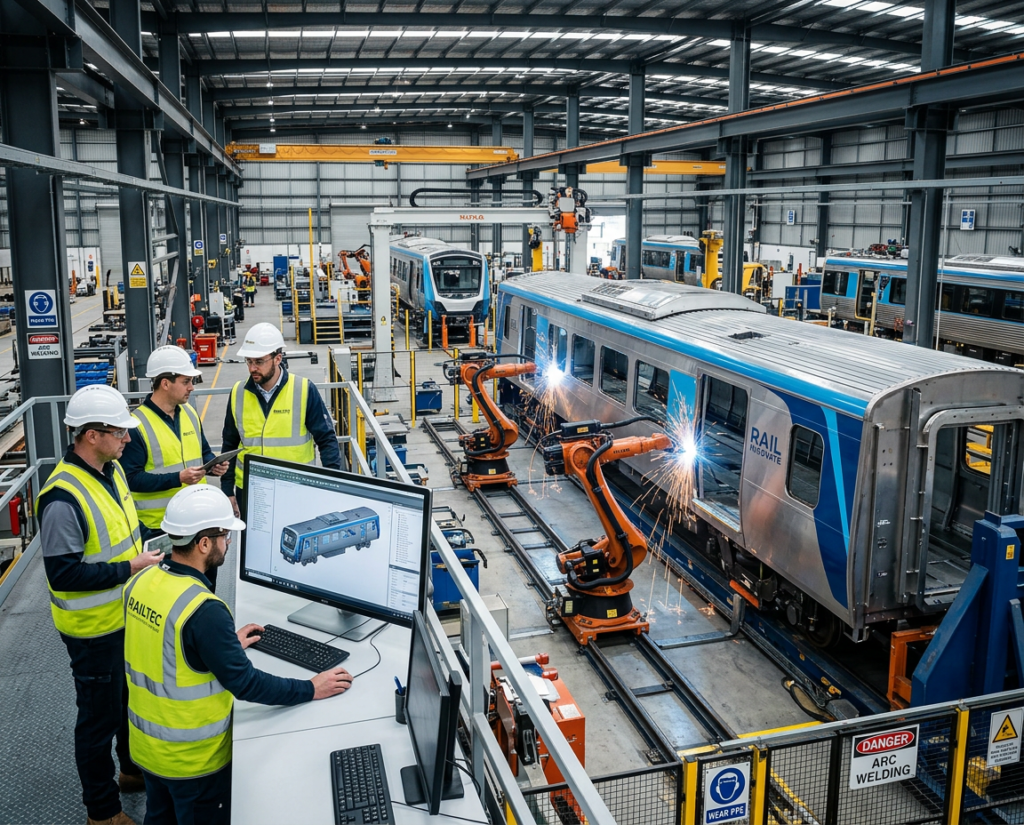
Now, years later, Kshitij himself was a railway engineer. But he didn’t work at RCF. He worked at the Integral Coach Factory (ICF) in Chennai—the very old factory his father had compared RCF to.
He stood in the massive shed, the rhythmic clang of metal echoing off the walls, watching the assembly of a new Vande Bharat Express train—a high-speed, world-class passenger train.
The old ICF was unrecognizable. It wasn’t just using computers; it was a completely transformed organization. Technology wasn’t a separate department; it was woven into the very DNA of the factory. He saw robots welding with perfect precision, engineers using augmented reality headsets for inspection, and a seamless digital feedback loop from the testing tracks to the design labs.
Kshitij leaned back, marvelling at the transformation. The story of Indian Railways, in his lifetime, was a testament to how a mammoth, conservative organization had not just accepted but deeply embedded, absorbed, and assimilated new technology.
- The initial fear of the Luddite (Dadaji) had given way to the Agile Manufacturer (Papa Kaushal).
- The Agile Manufacturer had paved the way for the Deeply Embedded Technocrat (Kshitij).
The entire organization had realized that technology was not a threat to the worker, but a multiplier of their capability, allowing them to design and produce faster, safer, and more advanced trains like the Vande Bharat. The protests of the past were now a faint echo, overshadowed by the roar of a modern, technologically empowered nation riding on its new, faster tracks.
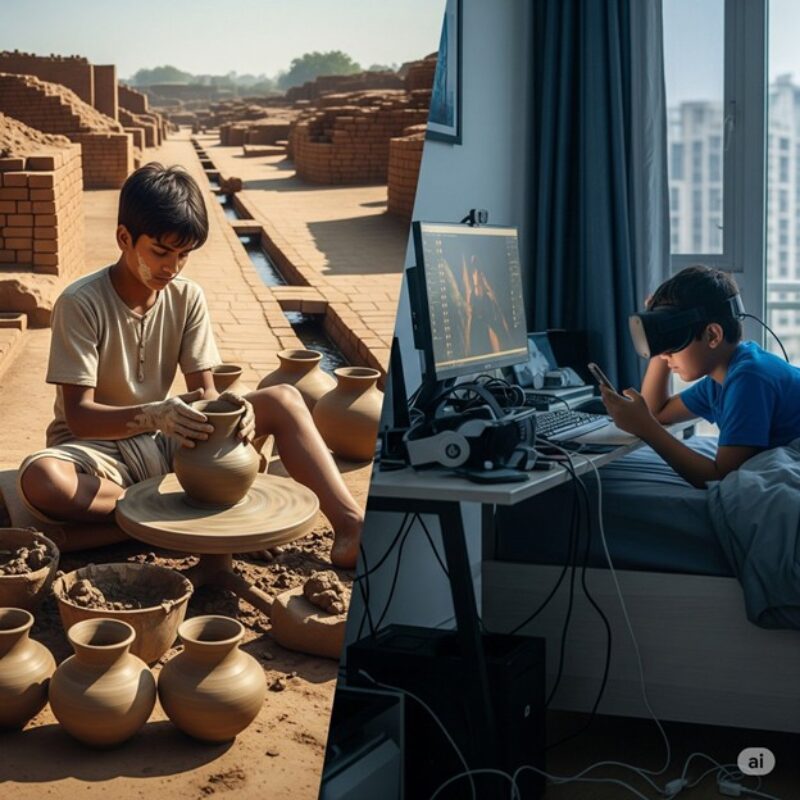
Kshitij was an early riser. His mind was at its best early in the morning. Next morning at 0500 hrs, he woke up wondering as to what his son would be doing with all the AI tools, twenty years hence !!
This short story is a work of fiction based on life experiences.